WORK
Circular Interface: Anatomy
INFO
Installation
Aluminum Profiles / Aluminum Connectors / Custom Aluminum Plates / UV-Printed Acrylic Panels / Fly-Wire Probe Board / RF Development Board / Silver-Plated RF Cables / Pneumatic Tubes / Simulated Blood / Vacuum Filter / Multi-Channel Splitter / Screws / Hooks
80 × 97 × 8 cm
Edition of 3 + 2 AP
2025
DESCRIPTION
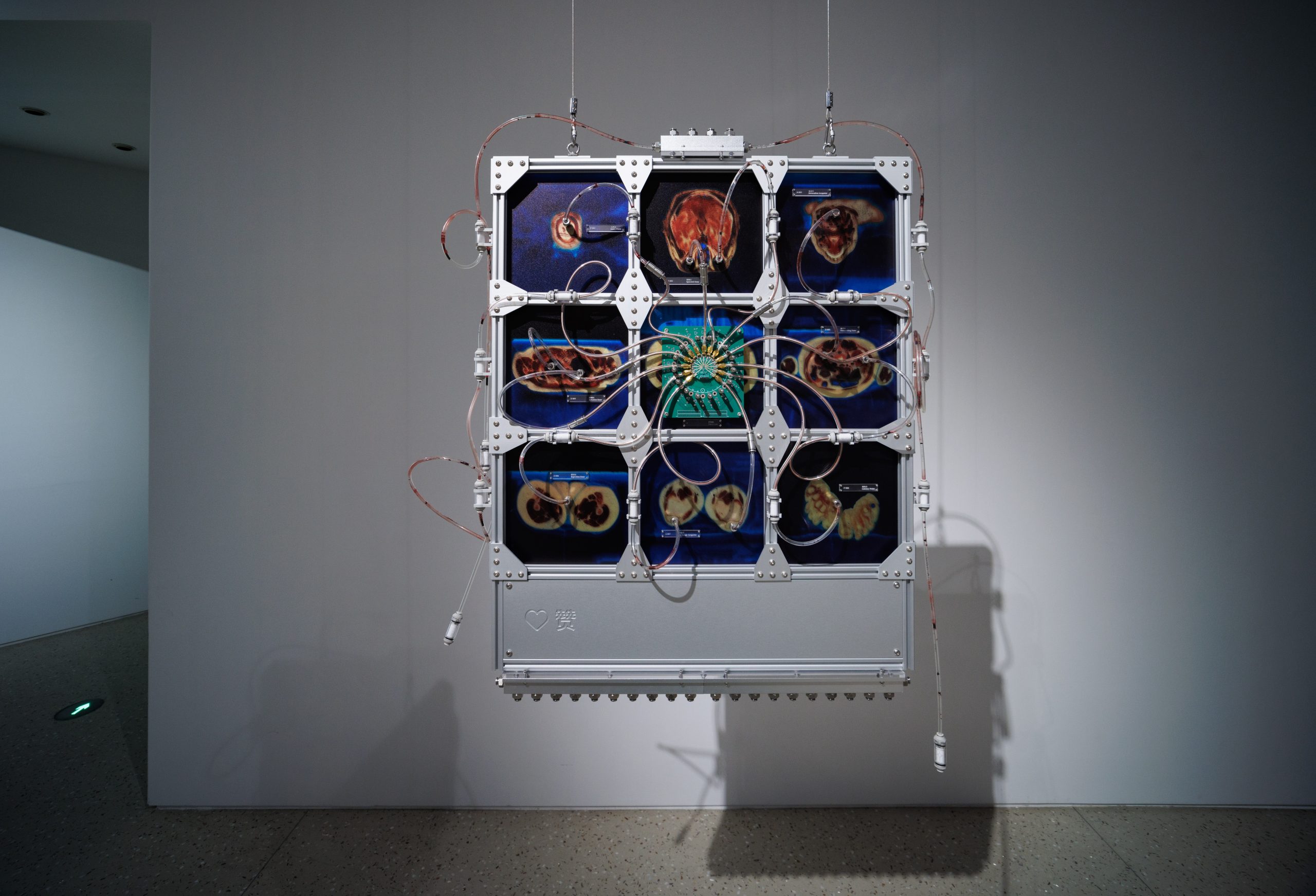
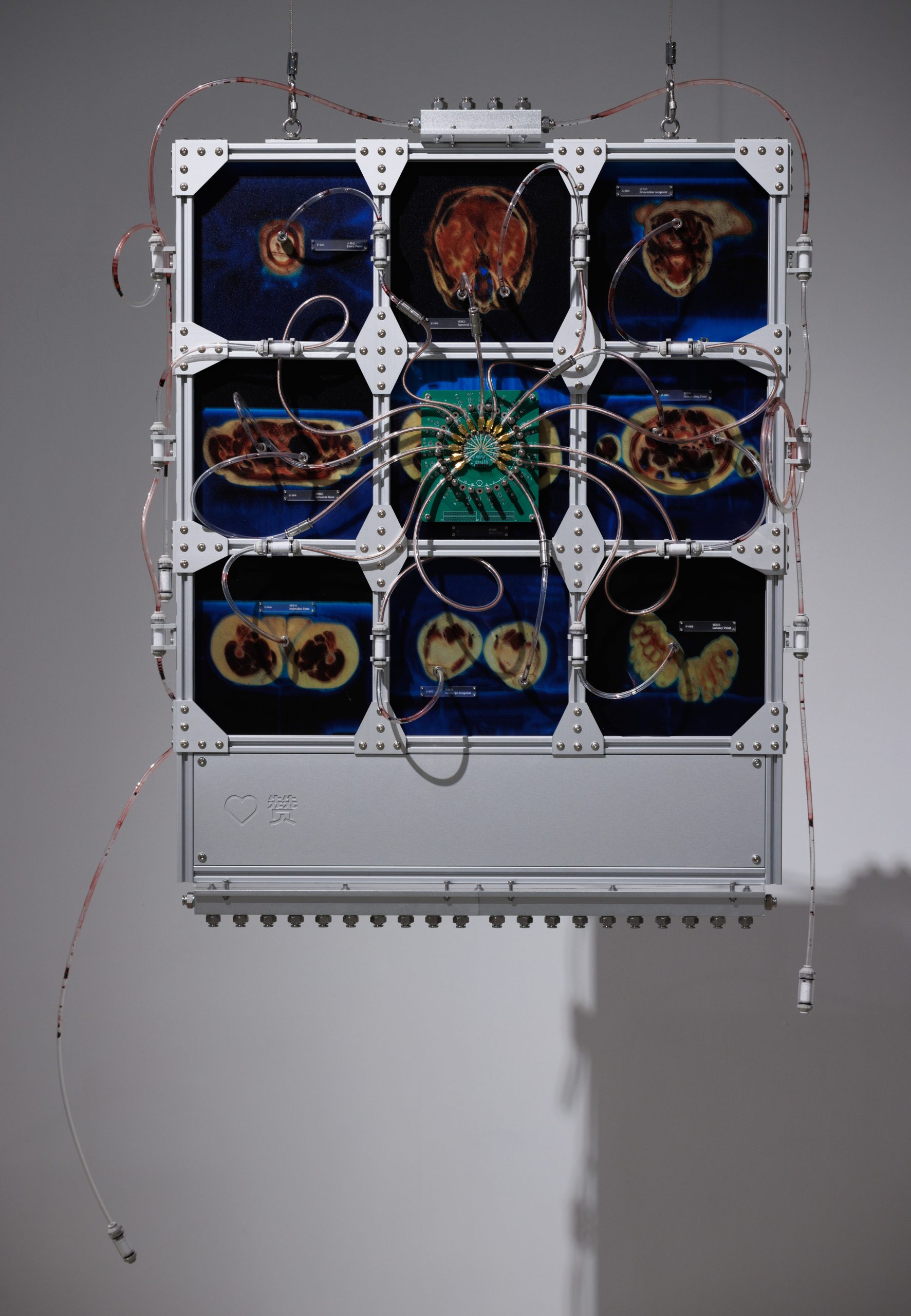
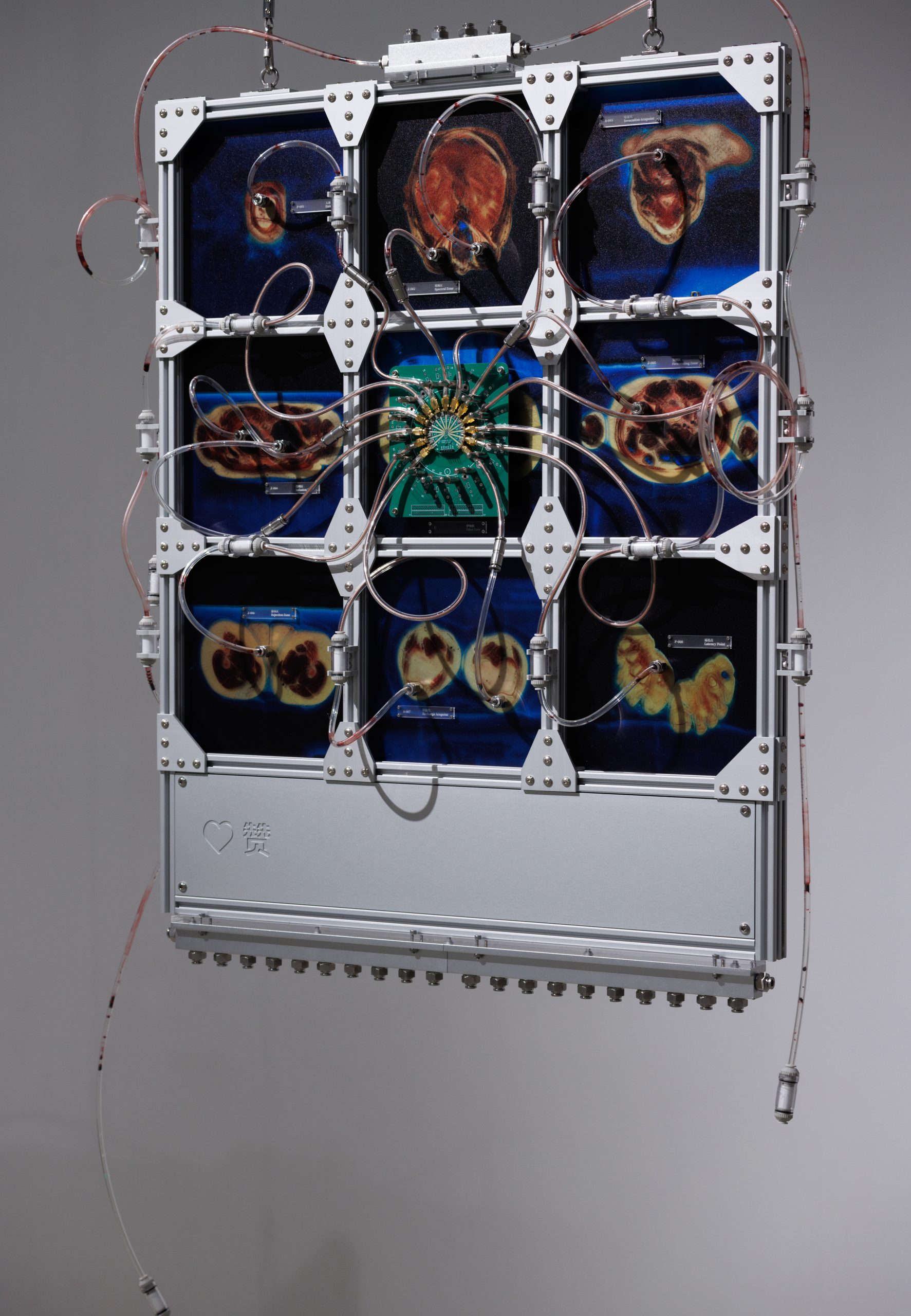
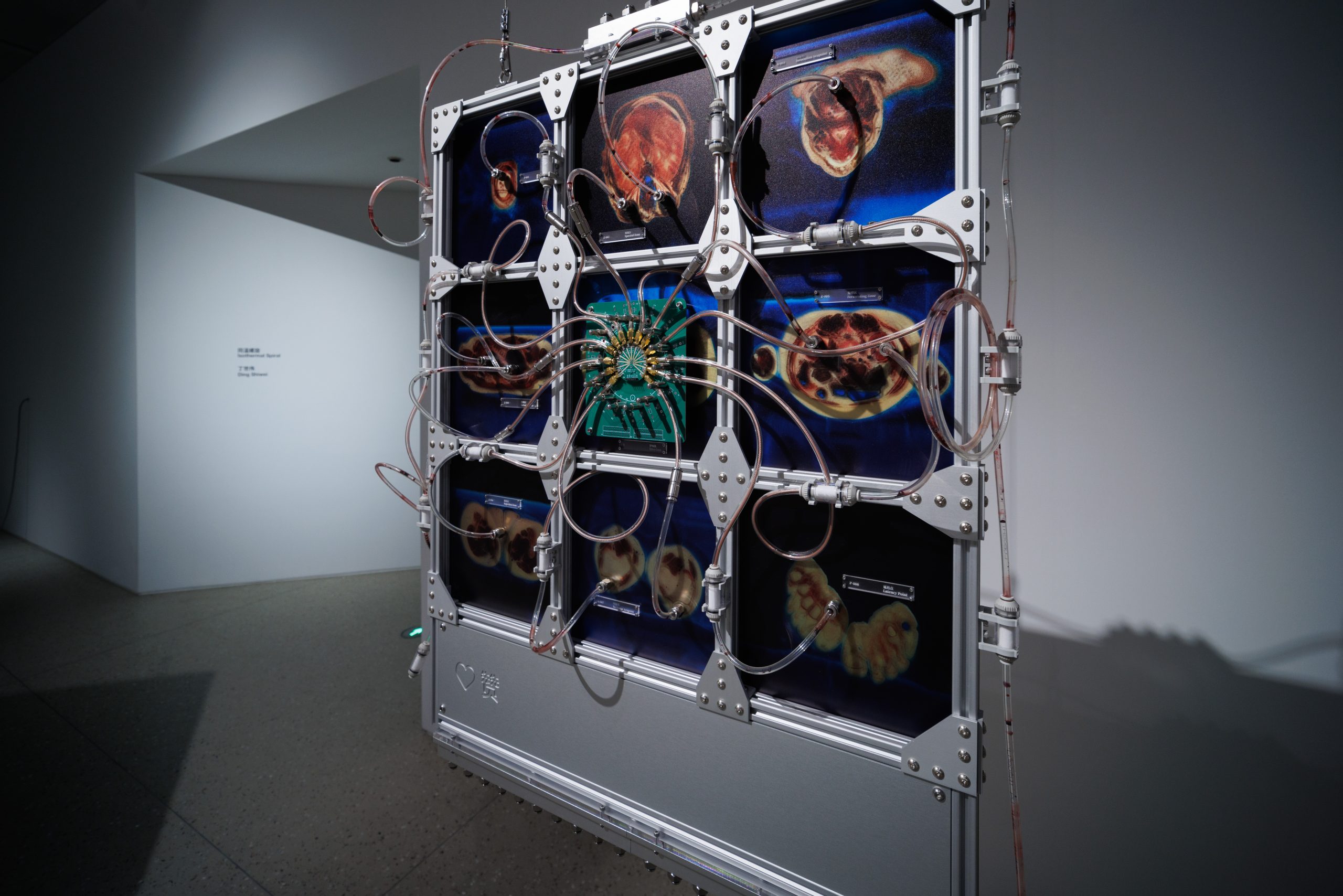
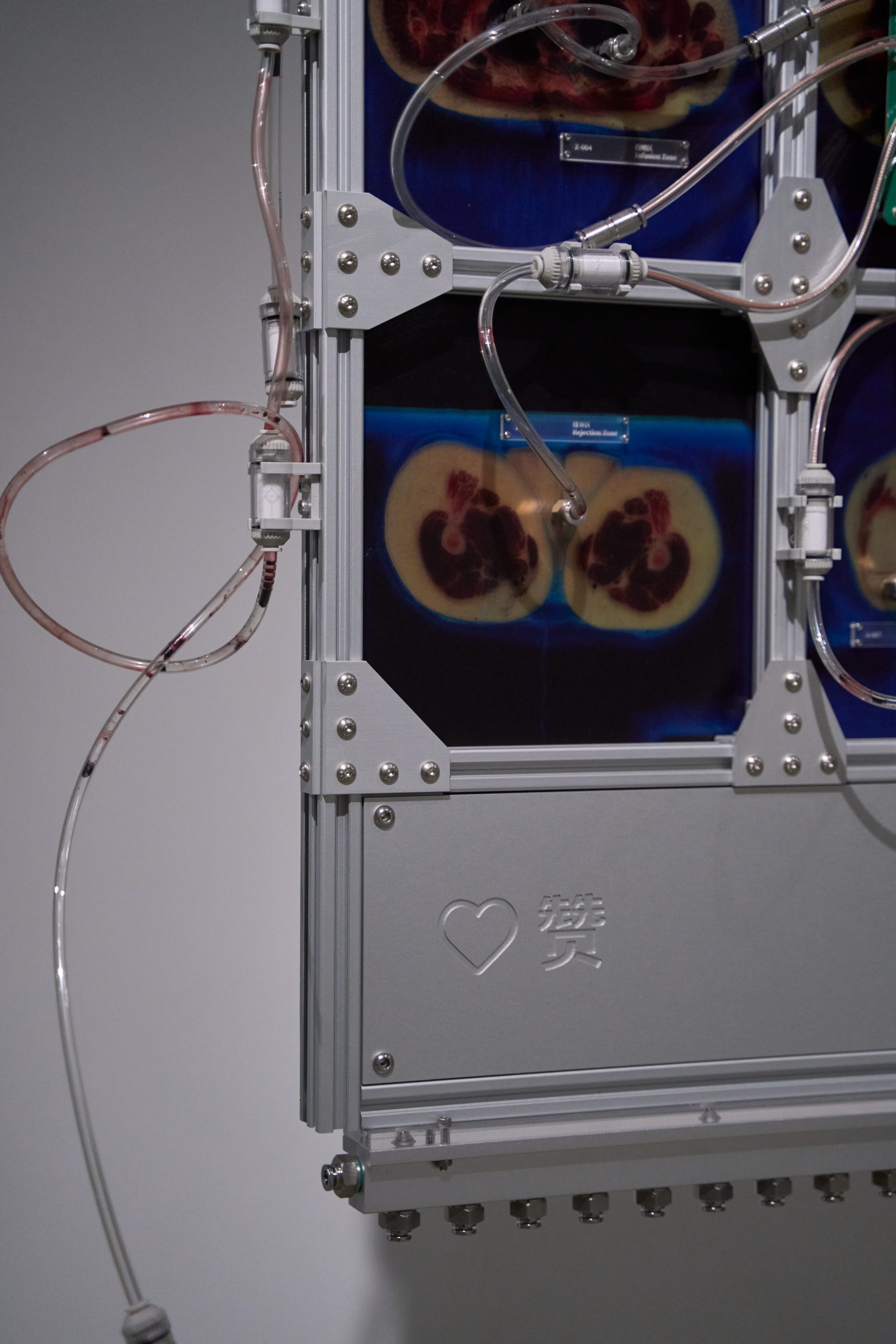
Circular Interface consists of eight custom-built structural units. Each unit is assembled from aluminum profiles and CNC-milled aluminum panels forming a nine-grid framework. The front surface of each panel is precisely engraved with the Chinese character for Like (赞), echoing the ubiquitous Like button across social media. The nine grids are joined by multi-screw aluminum connectors, maintaining a strict and modular geometry — the structure resembles both a standardized social-media interface and the barred window of a cell. On the reverse side, a milled circular barbed-wire pattern serves as a visual emblem, hinting at the hidden mechanisms of control behind the interface. Beneath the seemingly gentle surface of social imagery lies a field of surveillance, discipline, and partitioned vision. Together, the eight units form a closed loop — a structural model of algorithmic circulation — enclosing the viewer within the space of the interface itself.
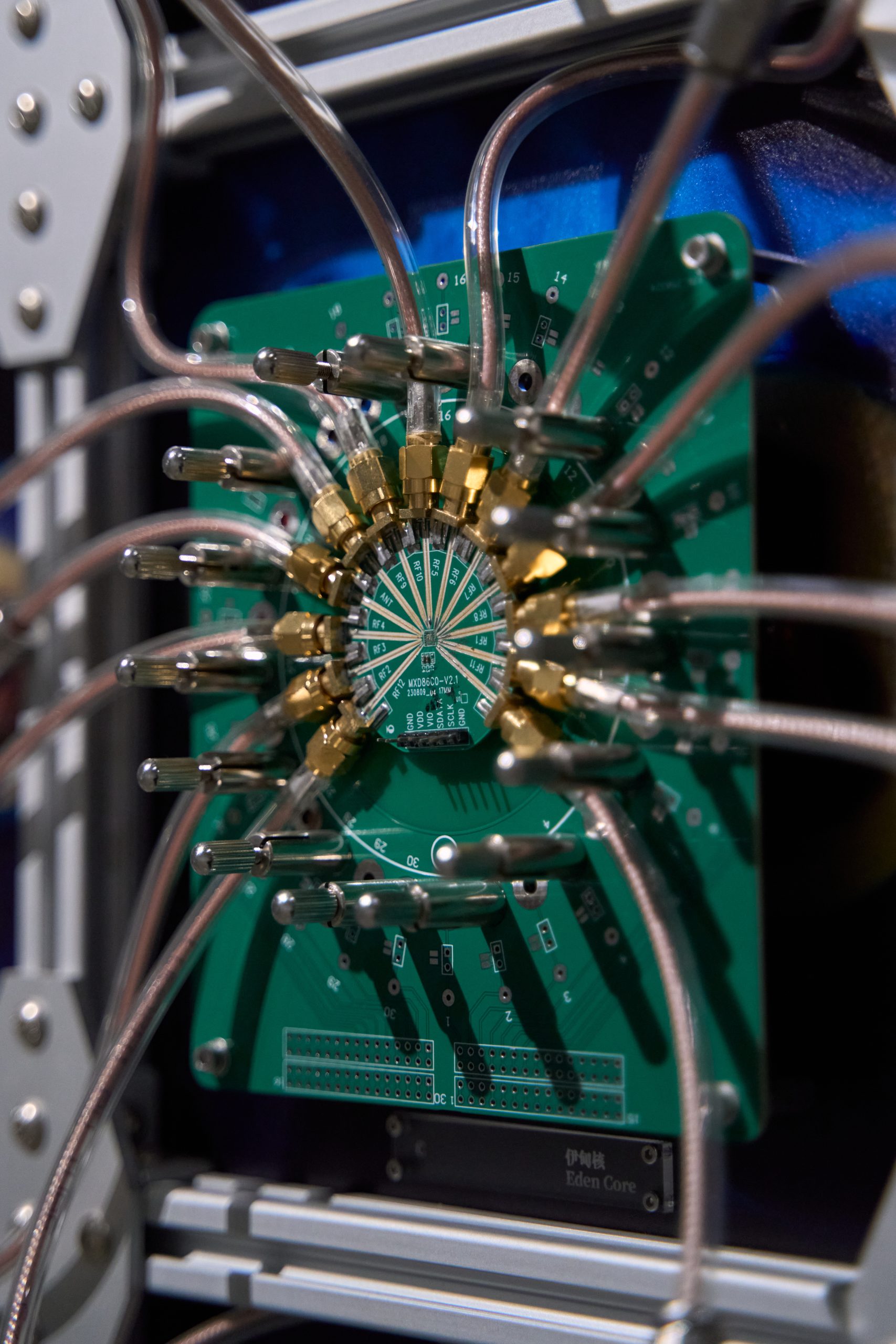
Circular Interface: Anatomy takes the medical imagery of The Visible Human Project as its visual source, extracting nine horizontal cross-sections of the human body—from head to toe—and arranging them sequentially within a nine-grid structure, each printed onto frosted acrylic panels. The work reorganizes and renames these anatomical images through the visual logic of traditional Chinese acupuncture diagrams, turning the body into a medium simultaneously dissected by science and reconstructed by symbols. From key points in each image, a transparent PU tube filled with simulated blood extends outward, all converging at the central fifth grid—the Eden Core. This central image is derived from the anatomical cross-section of the human reproductive region, over which a network of fine-wire probes and an RF development board is mounted, forming a core organ that fuses technological circuitry with biological metaphor. The PU tubes radiate from the central RF transmission interface, as if blood and signal flow within the same circulatory system. By invoking anatomy, the work refers not only to the precision dissection of the modern body by technology, but also to the redistribution of perception and desire in a mediated society. Here, the body is no longer a biological entity but a readable, conductive, and regenerative interface map.