WORK
Circular Interface: System
INFO
Installation
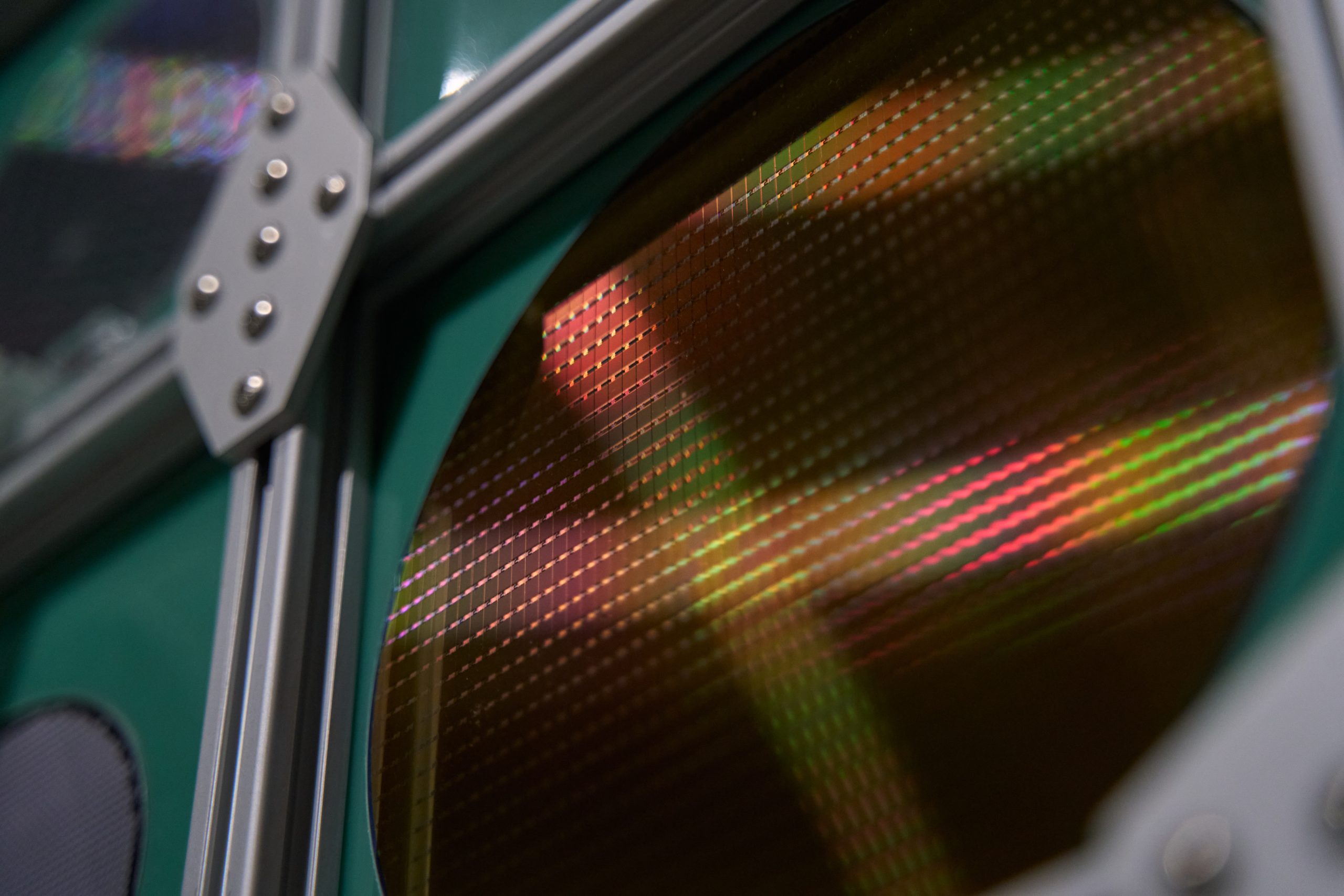
Aluminum Profiles / Aluminum Connectors / Custom Aluminum Plates / Fiberglass Board / Silicon Wafer / Power Extension Cable / Silicone / Acrylic / Screws / Hooks
75 × 91 × 17 cm
Edition of 3 + 2 AP
2025
DESCRIPTION
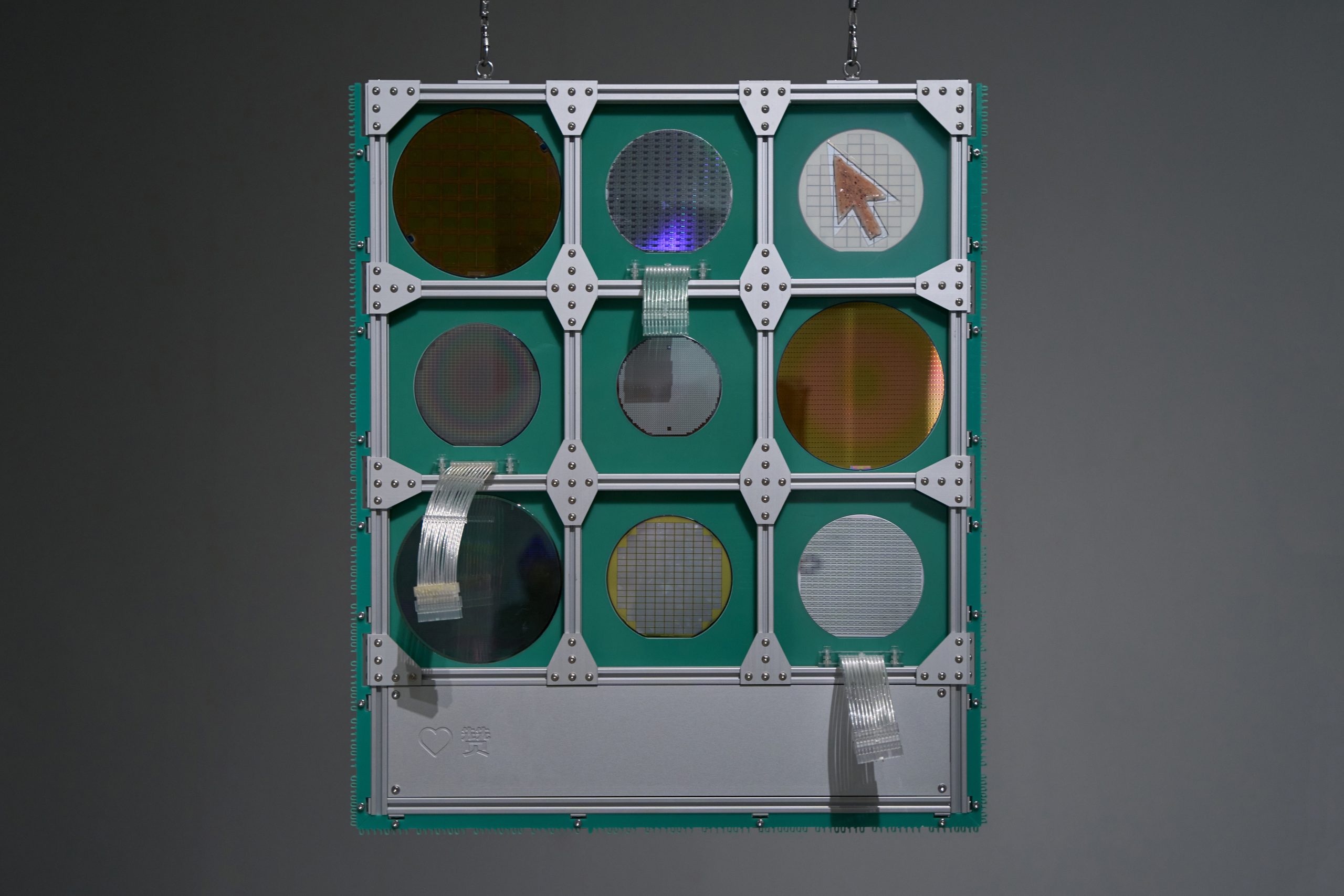
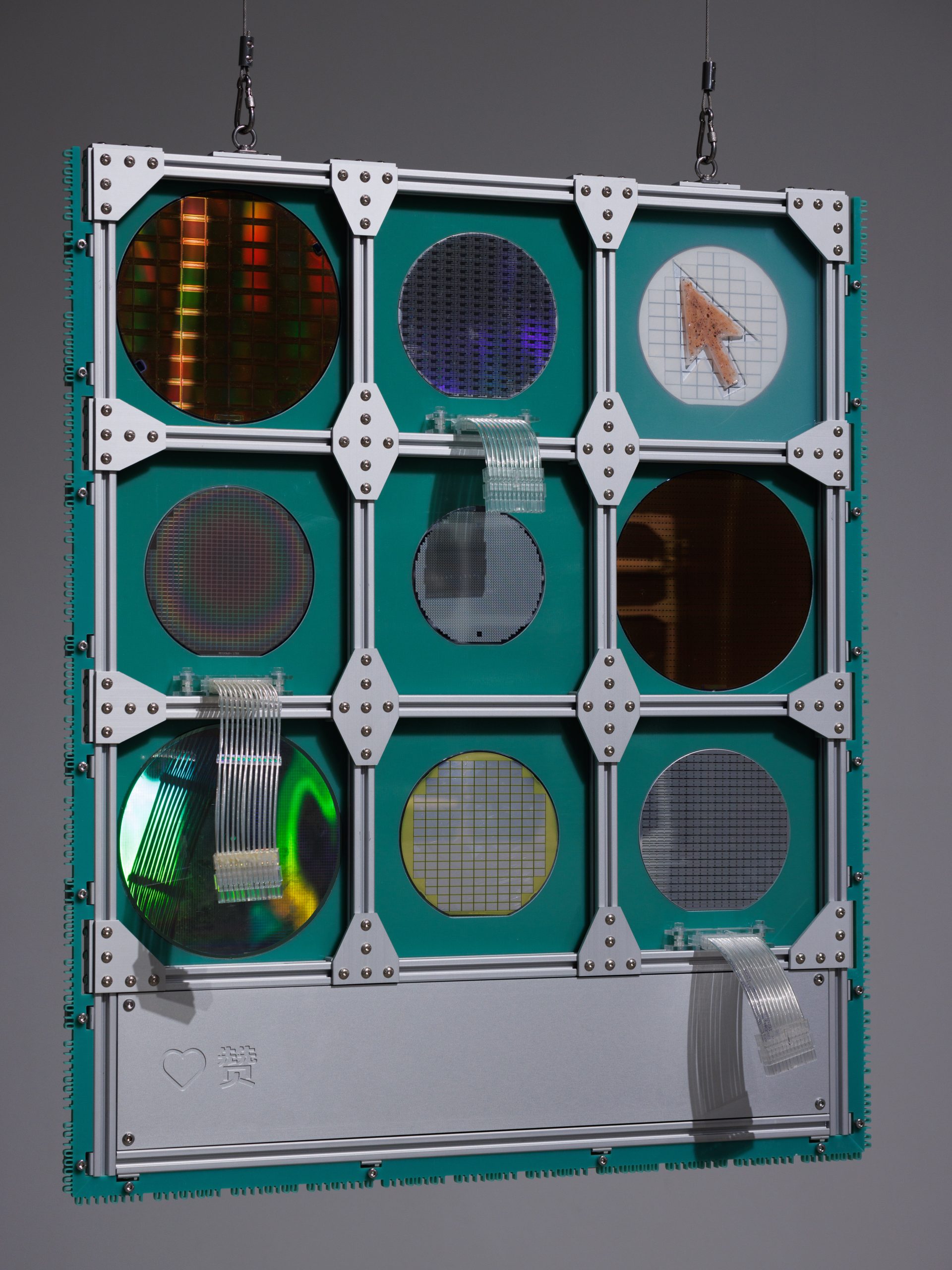
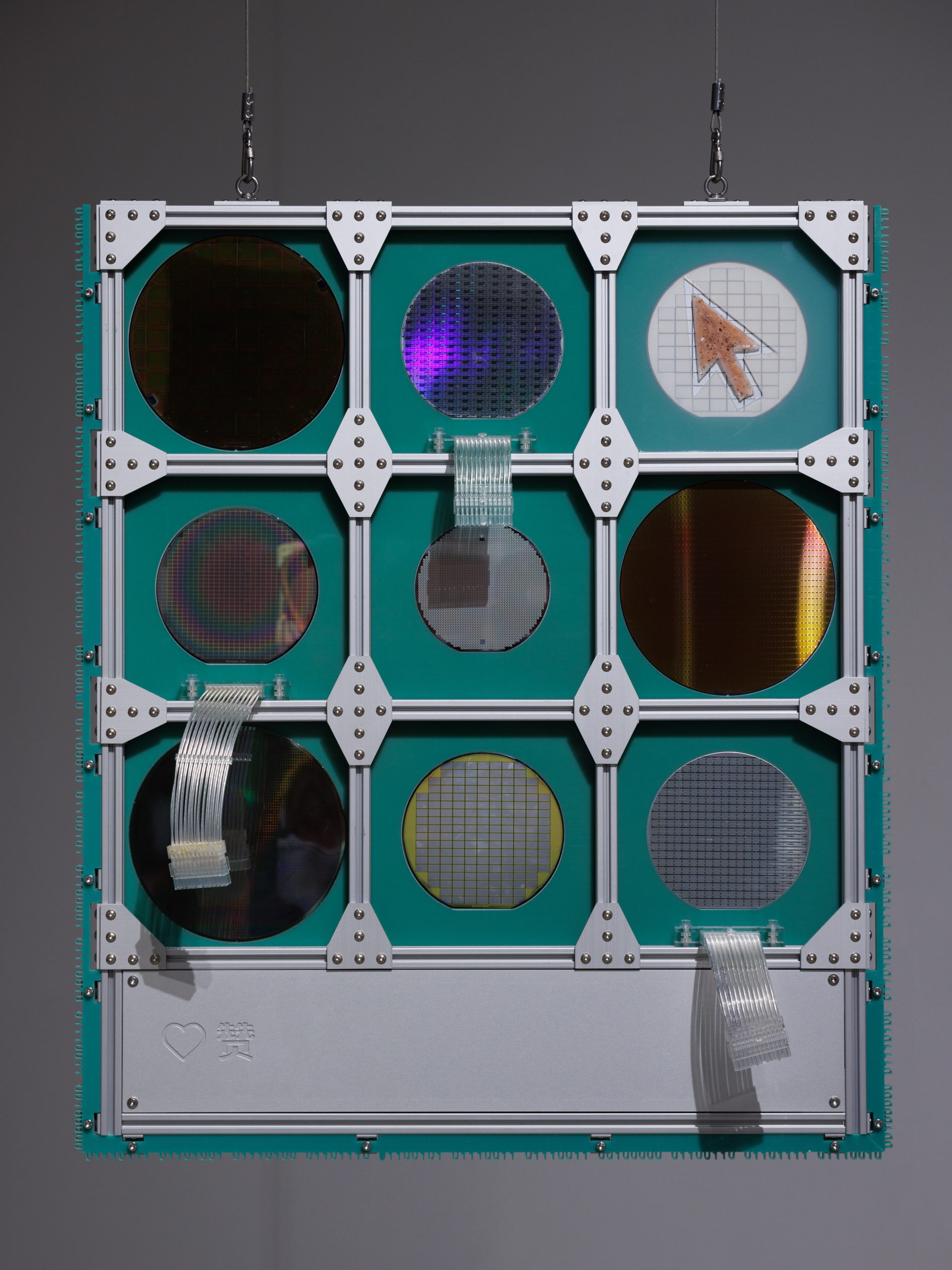
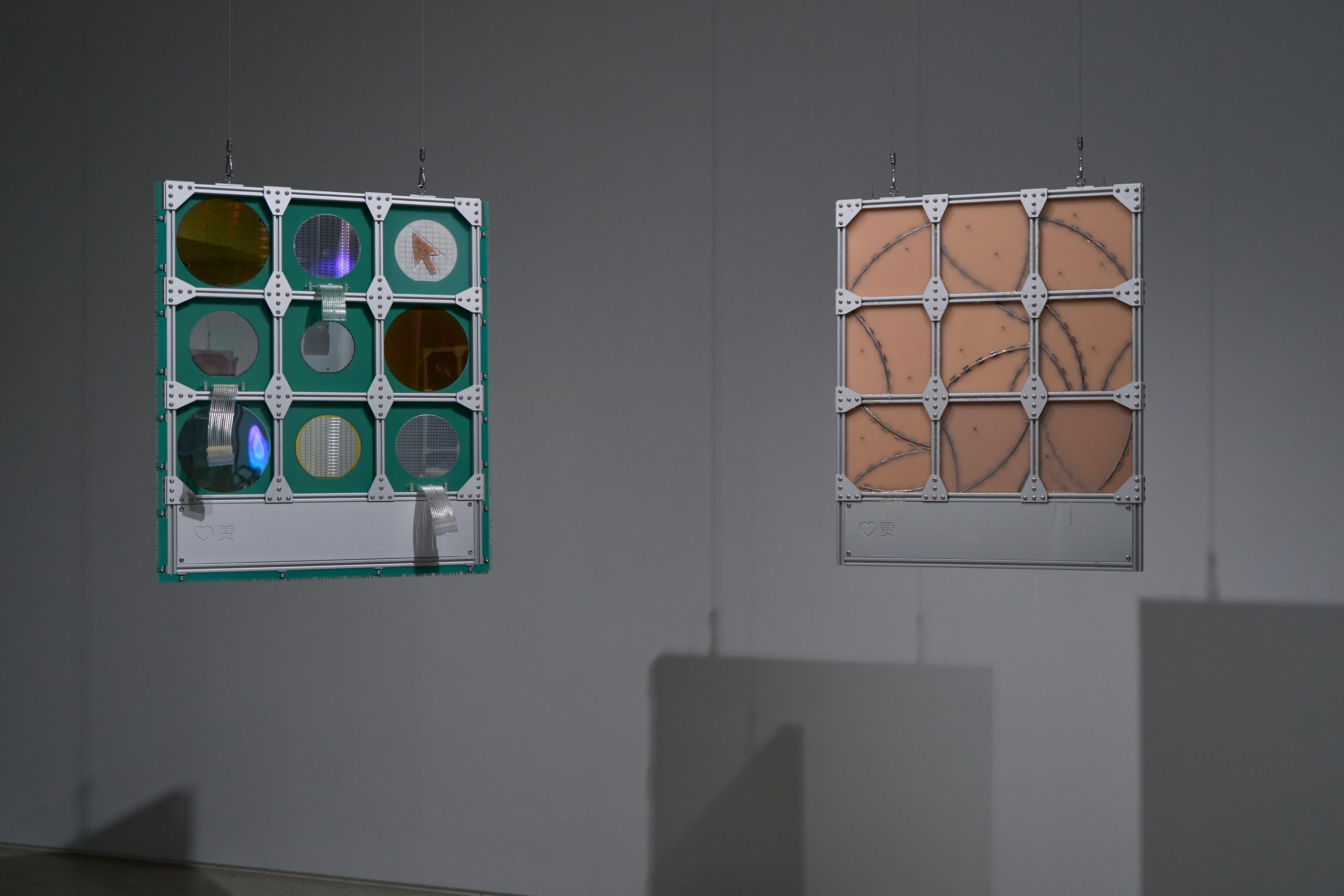
Circular Interface consists of eight custom-built structural units. Each unit is assembled from aluminum profiles and CNC-milled aluminum panels forming a nine-grid framework. The front surface of each panel is precisely engraved with the Chinese character for Like (赞), echoing the ubiquitous Like button across social media. The nine grids are joined by multi-screw aluminum connectors, maintaining a strict and modular geometry — the structure resembles both a standardized social-media interface and the barred window of a cell. On the reverse side, a milled circular barbed-wire pattern serves as a visual emblem, hinting at the hidden mechanisms of control behind the interface. Beneath the seemingly gentle surface of social imagery lies a field of surveillance, discipline, and partitioned vision. Together, the eight units form a closed loop — a structural model of algorithmic circulation — enclosing the viewer within the space of the interface itself.
Circular Interface: System presents a deconstruction of the technological infrastructure underlying contemporary social media and artificial intelligence. Beginning with the smallest electronic component, the work dissects the complexity of information technology in reverse: the chip is restored to its silicon wafer, the circuit board to its pale green fiberglass substrate, and the data connection to a 24-pin cable. In this reversal, the material foundations once hidden beneath layers of algorithms and enclosures are revealed again, turning the invisible into a visible structure. Along the aluminum frame, Paul Celan’s verse — No one bears witness for the witness. — is engraved and translated into binary code. Here, poetry becomes data; language is converted into the syntax of the machine, and the act of witnessing collapses into repetition and erasure. The work exposes a paradox: when all meaning is digitized and encoded, the system itself becomes the only witness that remains.